Know what visits your feeder.
Strixeo turns a spare Android phone into a wildlife camera. It watches a feeder, recognises what turns up, and sends the picture to your pocket while the animal is still standing there.
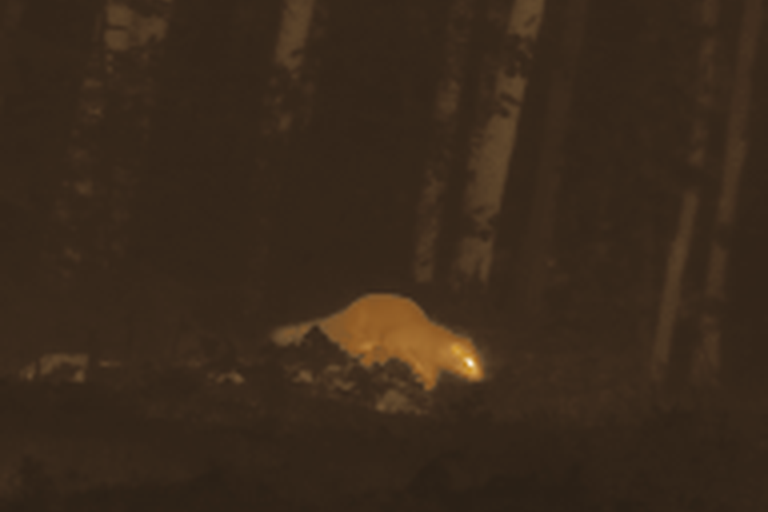
A real sighting, 02:52 on 14 October. The animal is 16.6 °C warmer than the wood behind it — which is how a camera finds a deer in a forest with no moon and no flash.
A trail camera stores pictures you look at days later. Strixeo tells you now, and it names what it saw on the phone itself — the photograph is never sent away to be recognised.
- 1 Leave a phone at the feeder Any spare Android handset. It watches and listens with the camera shut until something is actually there, so the battery lasts the night and then some.
- 2 It knows the animal itself Species recognition runs on the phone, offline, with no signal needed and nothing uploaded to decide what you are looking at.
- 3 You hear about it wherever you are One notification per visit, with the picture and the name. Tap it to look through the camera live and see whether the animal is still there.
How it knows
A feeder is watched by three senses, and they do different jobs. All three work today; what each is good for, and where each stops, is below.
By heat
A thermal camera sees a warm body against cold ground, in full darkness and through fog, with nothing to give itself away. The degrees of every pixel are kept, so a sighting can be re-examined months later instead of believed.
Measured: a deer at roughly 30 m, 16.6 °C above its background, on a night with no moon.
By sight
The phone’s own camera, at full resolution, with the species named on the device and offline — the photograph is never sent away to be recognised. It is the only sense that can tell you which animal, and the only one daylight is required for.
Next: an infrared camera, to carry sight into the dark without a flash an animal can see. The hardware is not chosen yet.
By sound
A microphone and a 521-class sound model, listening in under a millisecond per window. Hooves on frozen ground carry much further than a thermal camera sees, so sound is often what notices first.
Honestly: sound wakes the camera, it does not name the animal. Asked directly, the model calls a fox a dog and a roe deer a turkey — so the photograph does the naming.
Where this goes next
Further out
Range is optics, not ambition. At the lens we use, a body covers about 0.96 mm of ground per pixel for every metre of distance — so a deer 120 cm long is 36 pixels at 30 m, 12 at 100 m, and 4 at 300 m. Four pixels is a warm smudge: enough to say something is there, not enough to say what.
Pushing that out means a longer lens, and naming an animal by how it moves when there are too few pixels for how it looks. We will publish those numbers when they are measured.
From above
A thermal camera on a drone covers in ten minutes what a fixed feeder sees in a season — counting a herd, finding a wounded animal, surveying ground nobody can walk. Nothing is built. Every measurement we have assumes a camera that is standing still, and the rules on flying over wildlife are a real constraint rather than a footnote.
Where it has got to
Strixeo is being tested at real feeders and is not on Google Play yet. There is no mailing list to join. If you would like to hear when it opens up, write to support@strixeo.com and a person will read it.